GEO in 2026: Complete Guide to Generative Engine Optimization

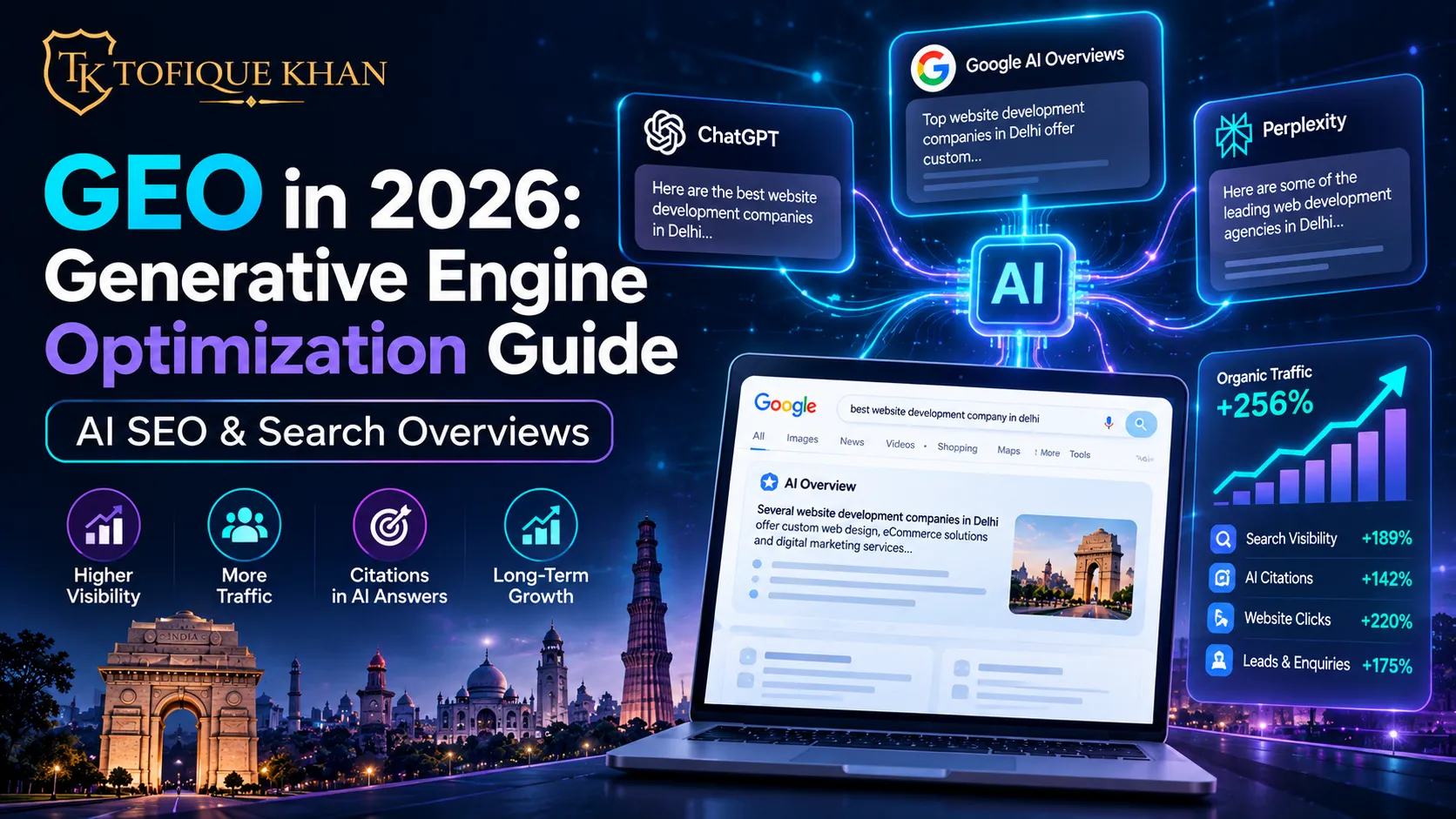
Search engine optimization is experiencing its most seismic transition since the invention of PageRank. For more than two decades, the objective of SEO was straightforward: target high-volume keywords, optimize on-page tags, build backlinks, and win one of the top ten blue links on Google’s first page.
In 2026, the game has fundamentally evolved. With the widespread adoption of Google AI Overviews, ChatGPT Search, Perplexity AI, and Claude-powered search assistants, users increasingly receive synthesized answers directly on their screens without ever clicking a traditional search result.
To capture sustainable traffic today, digital creators, marketing professionals, and website owners must master Generative Engine Optimization (GEO).
- What is Generative Engine Optimization (GEO)?
- Traditional SEO vs. Generative Engine Optimization (GEO)
- Core Strategies to Rank in AI Search Overviews
- 1. Implement Answer-First Formatting
- 2. Build Entity Authority and Semantic Depth
- 3. Use Clean Schema Markup
- 4. Emphasize First-Hand Experience (E-E-A-T)
- Conclusion
What is Generative Engine Optimization (GEO)?
Generative Engine Optimization (GEO) is the strategic practice of optimizing website content, structure, and digital brand presence so that artificial intelligence models and conversational search engines cite, quote, and recommend your website in their generated answers.
While traditional SEO focuses on keyword positioning and PageRank algorithms, GEO focuses on information density, semantic comprehension, entity credibility, and factual consensus.
Traditional SEO vs. Generative Engine Optimization (GEO)
| Factor | Traditional SEO | Generative Engine Optimization (GEO) |
|---|---|---|
| Primary Goal | Rank in top 10 search results | Earn source citations in AI synthesized answers |
| Target Queries | Exact and short-tail keywords | Conversational questions and complex prompts |
| Content Priority | Keyword frequency and length | Information gain, entity authority, and semantic depth |
| Authority Metric | Backlink profile and PageRank | Brand co-citations, trusted reviews, and factual consensus |
Core Strategies to Rank in AI Search Overviews
1. Implement Answer-First Formatting
AI search engines prefer self-contained, definitive answers that can be extracted cleanly. Beneath every major heading, include a 40-to-60-word direct explanation followed by bullet points or supporting statistics.
2. Build Entity Authority and Semantic Depth
Move beyond shallow listicles. Cover topics thoroughly by defining terms, explaining the technical underlying mechanisms, and providing original data points that cannot be found elsewhere.
3. Use Clean Schema Markup
Implement structured data including Article, FAQPage, and Organization schema. Clear schema acts as a direct API for AI crawlers, enabling them to verify facts, authors, and organizations instantly.
4. Emphasize First-Hand Experience (E-E-A-T)
AI models can easily produce generic summaries, making generic text worthless. Include real-world case studies, proprietary benchmarks, and first-hand operational insights that demonstrate authentic human expertise.
Conclusion
Generative Engine Optimization represents the next frontier of search visibility. By structuring your content with direct answers, deep semantic insights, and authentic authority, your website will stand out as a trusted primary source in the era of AI search.
Frequently Asked Questions
Does GEO replace traditional SEO?
No. GEO builds directly upon solid technical SEO fundamentals. Fast page loading speeds, mobile responsiveness, and clean code remain essential prerequisites.
How do I measure GEO success?
Track referral traffic from platforms like chatgpt.com, perplexity.ai, and google.com AI summaries in Google Analytics, alongside brand search impressions in Google Search Console.